
Simple & Basic Resume Templates
A simple resume isn't the compromise option — it's the professionally correct one. Recruiters skim, parsers match, and both do their job best on a single-column, reverse-chronological page with standard headings. What separates the templates here is typography, not structure: every one downloads free as Word, PDF or Google Docs.
5 templates
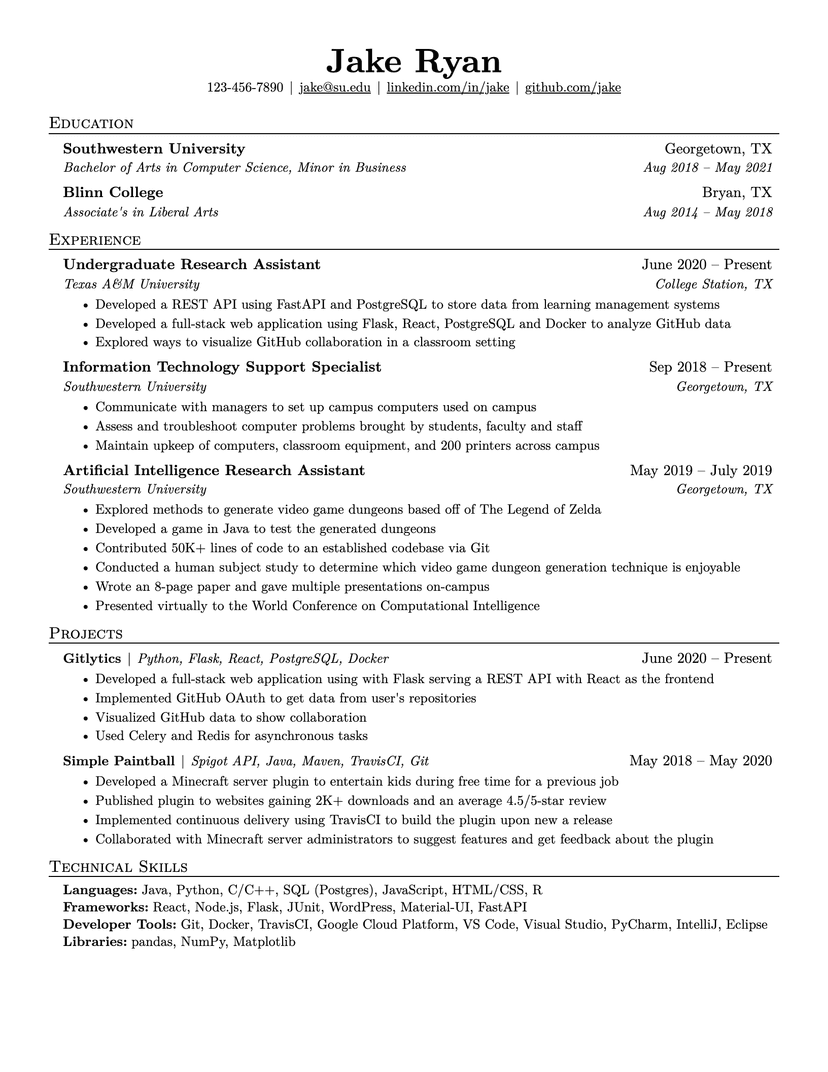
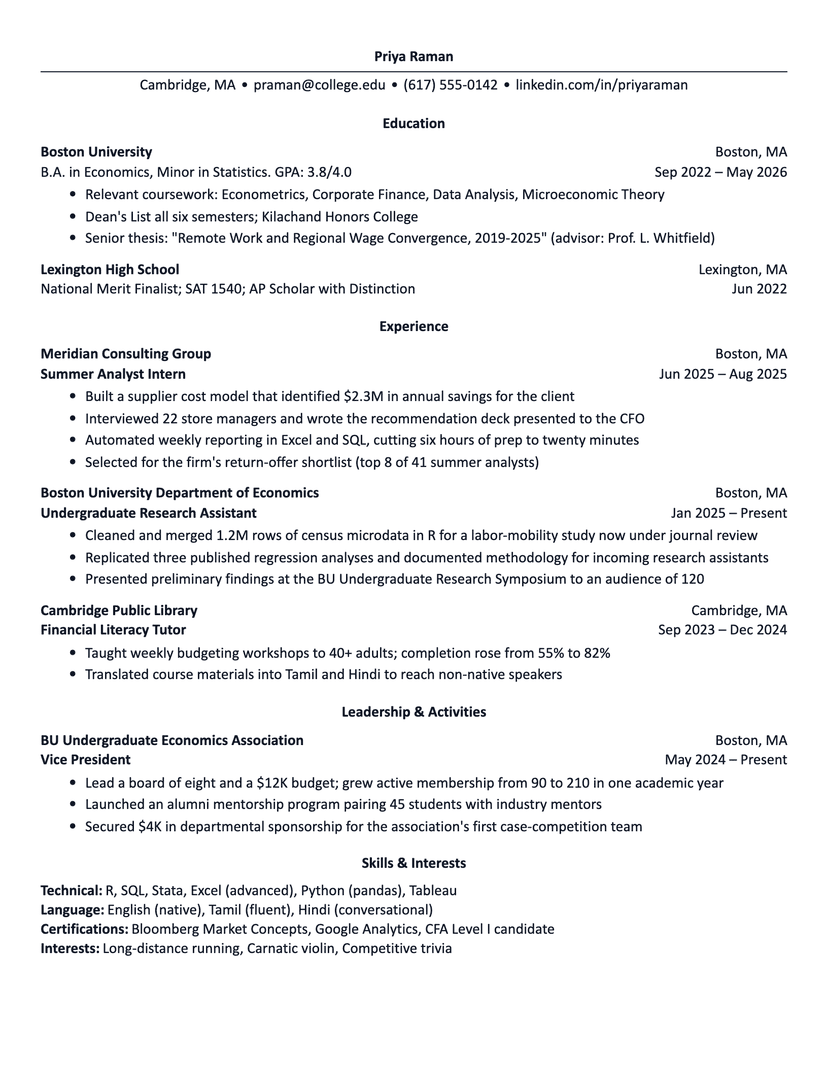
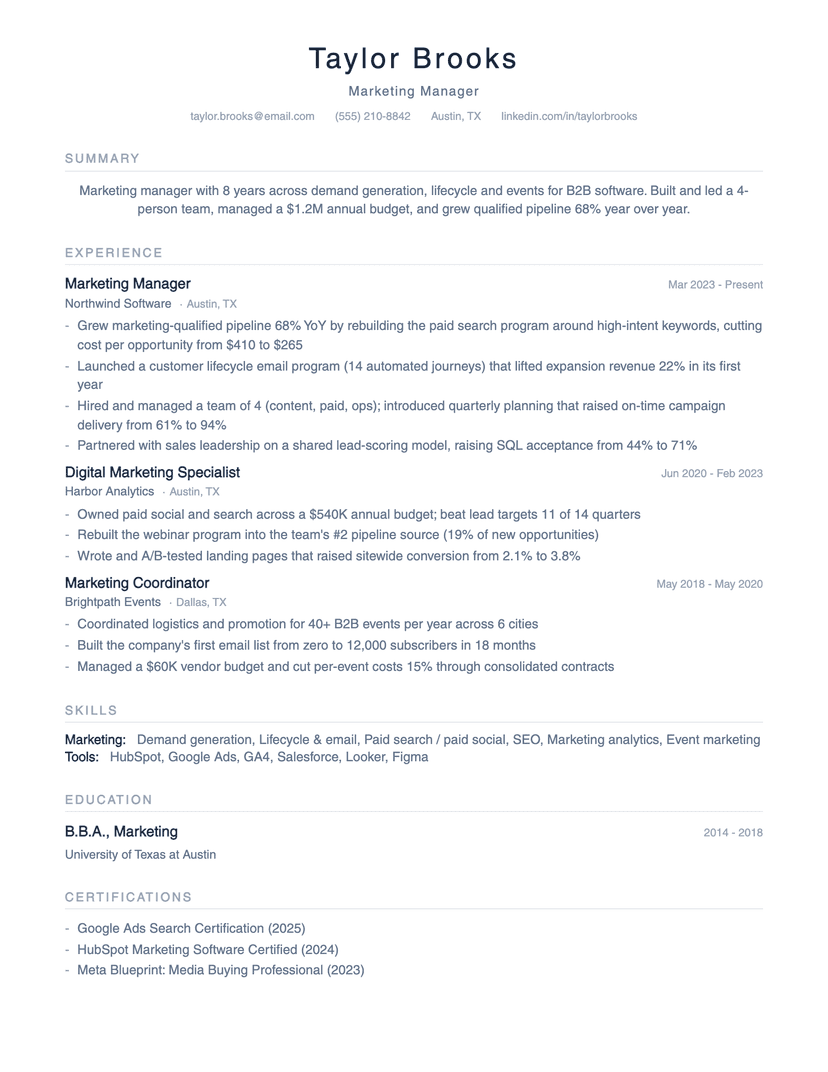
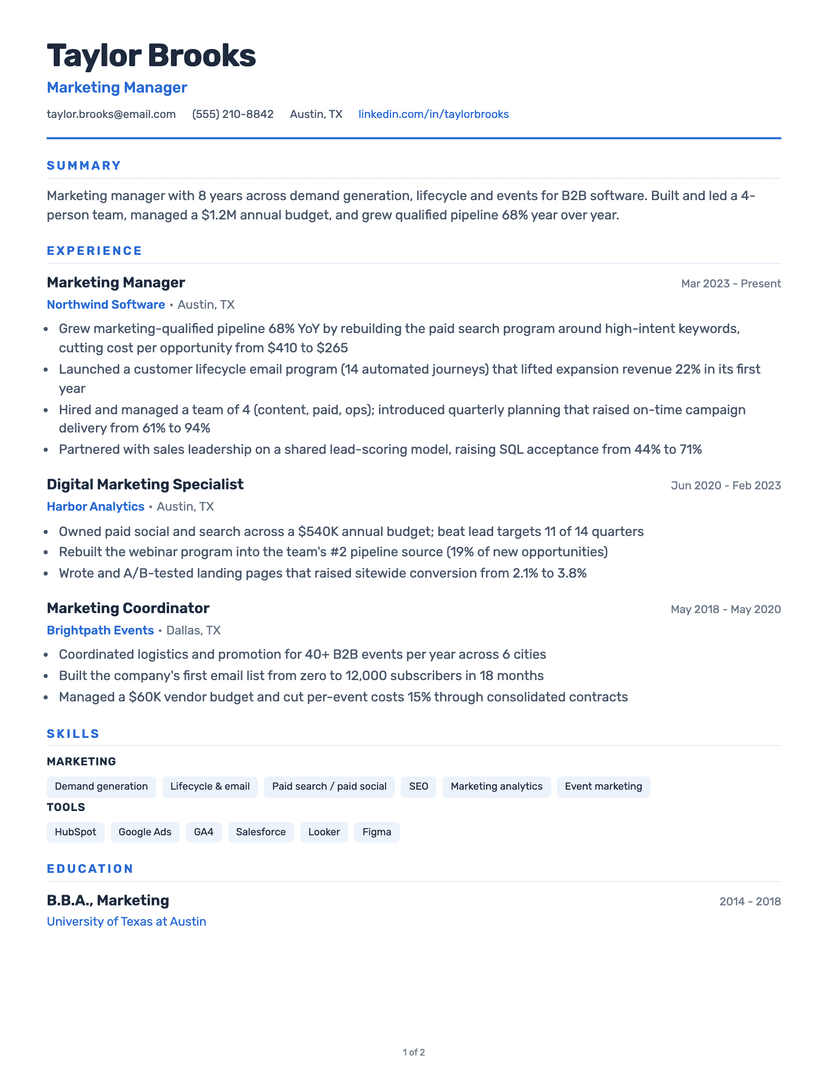
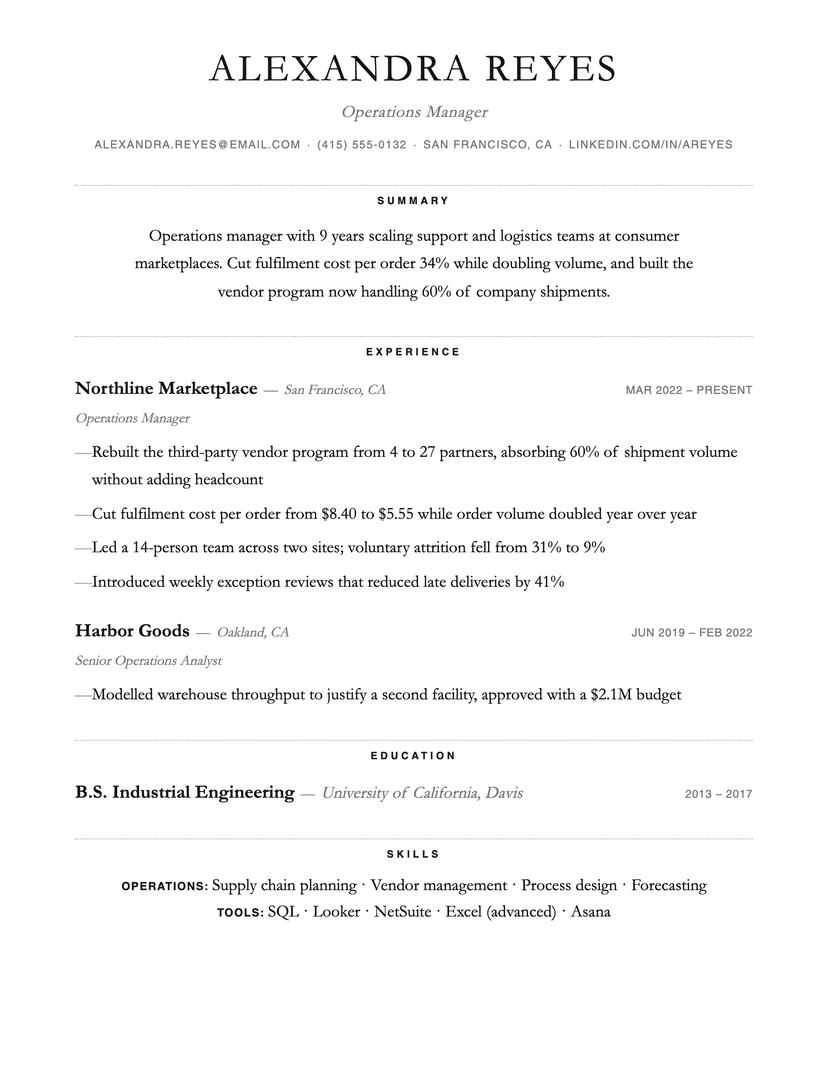
What is the easiest resume format?
A reverse-chronological layout in a single column: your most recent role first, standard section headings (Experience, Education, Skills), dates in a consistent position. It's the easiest to write, the fastest for a recruiter to skim — and it's the structure that passes through applicant tracking systems reliably, because parsing order and reading order are the same order.
Every template on this page is that format. The differences between them are typographic — density, whitespace, one accent color or none — not structural.
What "simple" actually means on a resume
It is a structural word wearing a visual disguise. A resume is simple when a reader — human or machine — can follow it in one pass: one column, sections in the order people expect, dates in a consistent place, and no element whose meaning depends on where it sits on the page rather than what it says.
That is not the same as plain. A template can carry a serif face, a rule under each heading and a single accent colour and still be structurally simple, because none of those choices change the reading order. Equally, a resume that looks austere — thin grey type, no lines, lots of air — can be structurally complex if its dates live in a floating column or its skills sit in a sidebar. Judge the skeleton, not the surface.
Where a simple resume actually costs you
Two places, and both are worth knowing before you pick one. In design, brand and creative-director roles, the resume is a work sample; a plain page there reads as a missed opportunity rather than as restraint. And at senior level, a very plain layout gives you no way to signal hierarchy — fifteen years of increasing scope flattens into an undifferentiated list, which is the problem the executive formats exist to solve.
Everywhere else — and that is most jobs — the cost is zero. No recruiter has ever rejected a candidate for a clean single-column layout. Plenty of qualified people are filtered out by decorated ones that parse badly, which is the asymmetry that makes simple the default rather than the fallback.
Keeping a simple resume from reading as an empty one
The failure mode of a plain template is not ugliness, it is looking thin. Three things fix it, none of them decorative. Write bullets that carry a number, because specifics fill a line with meaning rather than words. Group skills under two or three labelled headings instead of one long comma list, so the section reads as organised rather than dumped. And match the template's density to how much you actually have: a page built to hold two internships and four projects will look half-empty with three items in it, which is why the airier layouts here suit short histories better than the dense ones.
Simple vs. basic vs. plain: pick by content, not adjective
Searchers use "simple" and "basic" interchangeably, and so do we — the useful distinction is between templates. Dense simple (Jake's) fits the most content per page and suits students and engineers. Balanced simple (Classic) is the all-industry default. Airy simple (Minimalist) gives strong content room to breathe. If your one page is overflowing, go denser; if your bullets are strong and few, go airier.
Frequently asked questions
What is the easiest resume format?+
Single-column, reverse-chronological, standard headings. It's the fastest to write and skim, and it passes applicant tracking systems reliably — which is why every template on this page uses it.
Is a simple resume too boring for 2026?+
No — and the premise is worth questioning. A recruiter spends seconds on a first pass and is reading your content, not your layout. "Boring" is a designer's objection to a document whose job is to be skimmed and parsed. Where visual work genuinely matters — design and creative roles — send a portfolio; that is the artefact being judged.
What is the difference between a simple and a basic resume template?+
Nothing, in practice — searchers use them interchangeably and so do we. The distinction that matters is density: how much content a template is built to hold. Dense layouts fit a full page of projects and internships; airier ones make a short history look deliberate rather than sparse.
Are simple resume templates better for ATS?+
Yes, structurally: fewer layout elements means fewer things for a parser to misread. "Simple" in the visual sense isn't what matters — a decorated resume with a single-column structure parses fine, and a plain-looking one built on layout tables doesn't.
Do employers prefer simple resumes?+
Recruiters prefer resumes they can read in seconds, which simple formats deliver. Nobody was ever rejected for a clean single-column layout; plenty of qualified people are filtered out by decorative ones that parse badly.
Other collections
By style
By situation
Student Resume Templates
Coursework and projects carry the page.
6 templates
Internship Resume Templates
Built for people applying with little history.
5 templates
Entry-Level Resume Templates
First real job, minimal experience.
6 templates
Resume With No Experience — What to Put, and Free Templates
Volunteering, clubs and projects as evidence.
5 templates